
VAR Explained: 4 Key Steps Behind Every Big Decision
Quick Answer First
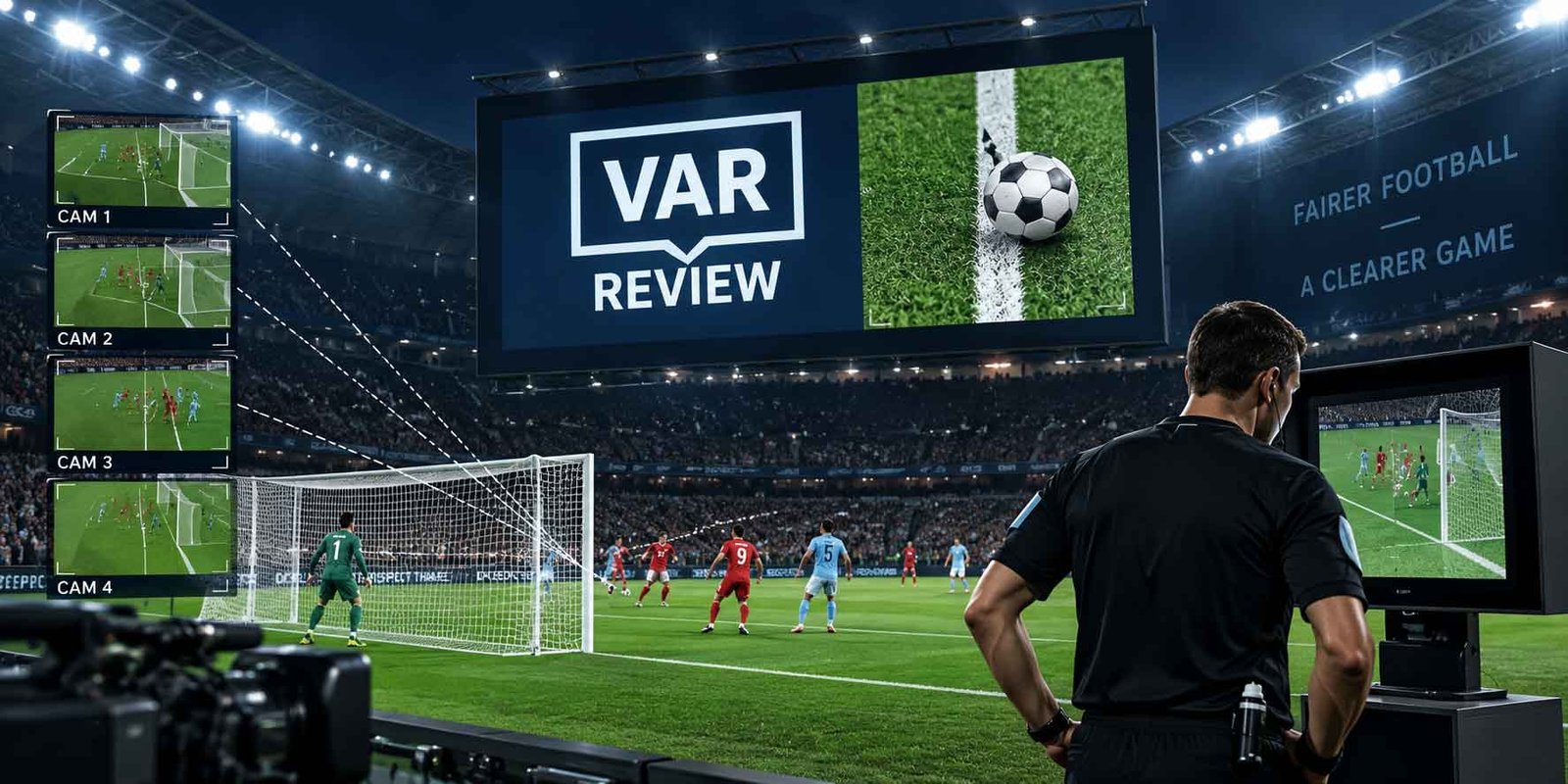
VAR explained simply: it stands for Video Assistant Referee, a system that allows match officials to review key decisions using video footage and communication with an off-field review team.
VAR doesn’t replace the referee on the pitch. Instead, it acts as a safety net for four specific situations: goals, penalty decisions, direct red cards, and cases of mistaken identity. If you’re short on time, here’s the core idea — the on-field referee’s decision stands unless the video assistant referee spots a “clear and obvious error,” at which point the referee is advised to either change the call or review the footage themselves on a pitch-side monitor.
Understanding how VAR works in football won’t make every review feel less controversial, but it does explain why some checks take seconds while others take minutes.
Why VAR Exists in the First Place
Football has always had close calls — a marginal offside, a shirt pull inside the box, a red card that could have gone either way. Before VAR, these decisions were final the moment the referee blew the whistle, mistakes included.
VAR was introduced to catch the moments where a genuine mistake would otherwise decide a match. It’s not designed to review every decision or replace the referee’s judgment on subjective calls. It’s specifically built to catch clear errors in a narrow set of situations.
If you’ve read our guide on the offside rule explained, you’ll already know that offside decisions can come down to centimetres. That’s exactly the kind of margin VAR was built to catch — situations where the human eye, even a trained one, can genuinely get it wrong.
How VAR Works in Football: The Basic Process
Here’s how VAR explained step by step actually looks during a match:
Step 1: Continuous monitoring.
The video assistant referee and their team watch the match from a separate video operation room, reviewing multiple camera angles throughout the game — not just during controversial moments.
Step 2: Flagging a potential error.
When something happens in one of the four reviewable categories, the VAR team checks the footage to see if the on-field decision might be a clear and obvious mistake.
Step 3: Communicating with the referee.
If the VAR team believes an error occurred, they radio the on-field referee. Depending on the situation, this can result in either a “VAR review” — where the referee is simply told to change the decision — or an “on-field review,” where the referee checks the footage personally on the pitch-side monitor.
Step 4: Final decision.
The on-field referee always makes the final call, even after consulting VAR footage. The technology assists, but it doesn’t override the human official’s authority.
This process is why some VAR checks resolve in seconds — a clear offside line, for example — while others involving penalty decisions or red cards can take several minutes to review from multiple angles.
Video Assistant Referee: What It Can and Can’t Review
A video assistant referee only steps in for four specific categories, and it’s worth being clear about what falls outside that scope:
- Goals — checking for offside, fouls in the build-up, or the ball going out of play before the goal.
- Penalty decisions — reviewing whether a penalty should have been given or should be overturned.
- Direct red card incidents — serious foul play, violent conduct, or denying an obvious goal-scoring opportunity.
- Mistaken identity — correcting a card shown to the wrong player.
What VAR generally doesn’t get involved in are yellow cards, most fouls outside the box, and subjective judgment calls that don’t clearly cross into “obvious error” territory. This is a common source of confusion — fans often expect VAR to review everything, when it’s actually built around a fairly narrow set of situations.
Why VAR Decisions Still Spark Debate
Even with clearer footage and multiple camera angles, VAR hasn’t eliminated controversy from football — and honestly, it was never designed to. The system is built around correcting clear and obvious errors, not settling every marginal judgment call.
A tight offside decision reviewed frame-by-frame can still feel harsh to fans watching in real time, even when the video assistant referee’s call technically matches the letter of the law. Similarly, what counts as a “clear and obvious error” for a penalty decision still involves a degree of human interpretation from the review team.
This is partly why understanding how VAR works in football matters — once you know the review only kicks in for narrow, specific triggers, a lot of the “why didn’t VAR check that?” confusion starts to make more sense.
Common Misunderstandings About VAR
A few myths tend to follow VAR around, worth clearing up:
“VAR reviews every decision in the match.”
Not true — it’s limited to the four categories mentioned earlier. Most fouls, tactical decisions, and yellow cards are never reviewed.
“The referee has to accept whatever VAR says.”
Not quite — the on-field referee retains final authority, even during an on-field review. VAR advises and provides footage; the referee still makes the call.
“VAR makes decisions instantly.”
Some checks are quick, but reviews involving penalty incidents or potential red cards often require checking multiple angles and replaying the sequence at different speeds, which takes time.
Final Thoughts
VAR explained in full still comes down to one core idea: it’s a tool for catching clear, obvious mistakes in a handful of high-stakes situations, not a system designed to make football error-free.
Once you understand how VAR works in football — the four reviewable categories, the referee’s final authority, and why some checks take longer than others — the process feels a lot less mysterious, even if the decisions themselves remain debatable.
Paired with our guide on the offside rule explained, you’ll have a much clearer picture of why football’s most contested calls happen the way they do — and why the video assistant referee exists to catch the moments a human eye simply can’t.
For the official technical breakdown, IFAB’s VAR protocol remains the most authoritative reference.



















Leave A Comment