
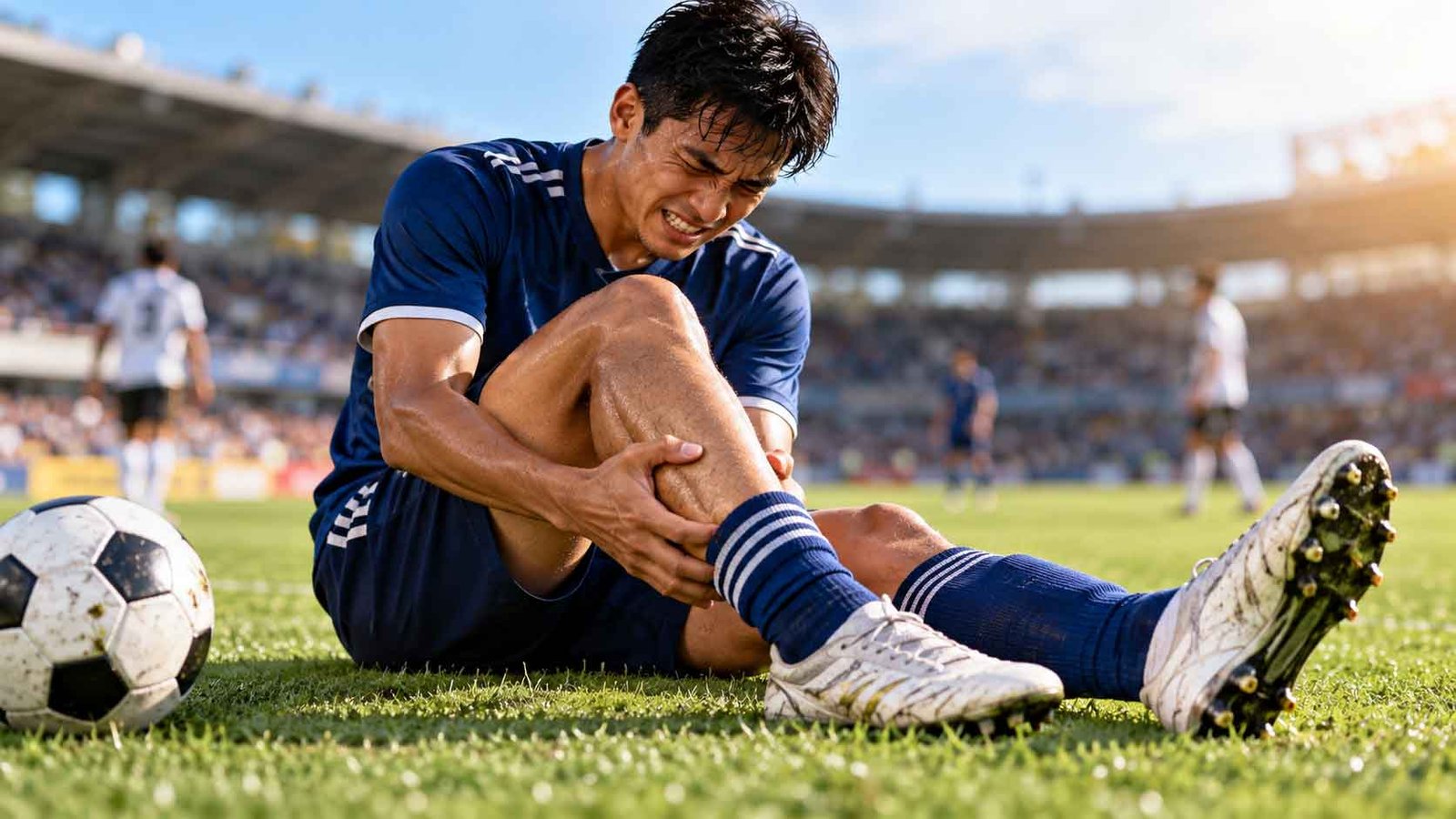
Why Do Football Players Get Cramps? The Science Explained
The Short Answer: Why Do Football Players Get Cramps?
Football cramps can happen when a muscle suddenly tightens and refuses to relax, causing sharp pain that can stop a player in their tracks. They often appear during intense exercise or late in a match, when tired muscles have already done a lot of work.
The science is more complicated than simply drinking too little water. Research suggests that muscle fatigue and changes in neuromuscular control may contribute to exercise-associated muscle cramps. Dehydration and electrolyte losses may also matter for some players, but they do not explain every case.
For football players, the best approach is to prepare for the demands of the match, build fitness gradually, manage fluid intake and pay attention to personal cramp history. If a cramp happens, stopping or reducing activity and gently stretching the affected muscle can help.
What Are Football Cramps?
Football cramps are sudden, involuntary and usually painful muscle contractions that occur during or shortly after physical activity. They commonly affect muscles that work hard during a match, such as the calves, hamstrings and quadriceps.
A player may first notice tightness or small muscle twitches before the pain becomes intense. The affected muscle can feel hard or knotted, making it difficult to run, kick or change direction.
These muscle cramps are different from ordinary tiredness. Fatigue may make the legs feel heavy, but a cramp causes a sudden, involuntary contraction. Although many exercise-related cramps settle with rest and gentle stretching, severe symptoms should not be ignored.
Muscle Cramps: What Does Science Say?
Scientists have studied exercise-associated muscle cramps for years, but there is still no single explanation that accounts for every episode.
A major evidence-based review published in the Journal of Athletic Training in 2022 concluded that exercise-associated muscle cramps are likely influenced by a combination of individual and environmental factors, rather than one universal cause.
One leading explanation involves altered neuromuscular control. In simple terms, the nerves that control a working muscle may become more excitable under certain conditions, especially when fatigue develops. This may contribute to a muscle contracting involuntarily instead of relaxing normally.
However, this is not a complete explanation for every case. Hydration, electrolyte balance, exercise intensity, conditioning and a player’s previous experience with cramps may all be relevant.
You can read the research in this evidence-based review of exercise-associated muscle cramps.
5 Reasons Football Players May Get Cramps
1. Muscle Fatigue During Intense Matches
Football involves repeated sprints, sudden stops, jumps, tackles and changes of direction. These movements place considerable demands on the muscles, particularly during the later stages of a match.
When a player pushes beyond their current level of conditioning, fatigue may increase the likelihood of involuntary muscle contractions. A player who has not built up enough endurance for a full match may be especially vulnerable.
This does not mean every cramp is caused by poor fitness. Even well-trained football players can experience cramps, especially when match demands exceed what their bodies are accustomed to.
2. Dehydration and Fluid Loss
Football players can lose fluid through sweating, particularly during training or matches in Malaysia’s hot and humid weather. If fluid losses become substantial, dehydration may affect physical performance and overall health.
However, it is inaccurate to say that all football cramps happen because a player has not drunk enough water. Research on exercise-associated muscle cramps suggests that fatigue-related factors can also play an important role.
Players should begin exercise adequately hydrated and drink according to their needs, the conditions and the duration of activity. Drinking excessive amounts of water is not a safe solution either, because overhydration can cause dangerously low blood sodium levels.
3. Electrolyte Losses
Electrolytes such as sodium and potassium help the body maintain fluid balance and support normal nerve and muscle function. Sweating can lead to the loss of water and electrolytes, although the amount varies between individuals.
This is why electrolyte drinks may be useful during prolonged, strenuous exercise, especially when sweat losses are high. However, they are not a guaranteed cure for muscle cramps, and not every player needs a sports drink during every session.
A balanced diet and an appropriate hydration plan are usually sensible starting points. Players who sweat heavily or repeatedly develop cramps may benefit from reviewing their individual needs with a qualified sports dietitian or healthcare professional.
4. Sudden Increases in Training Load
The body needs time to adapt to physical demands. A player who suddenly increases training intensity, adds extra sessions or returns to football after a long break may struggle to cope with the workload.
This does not prove that a sudden increase in training directly causes every cramp. However, managing training load and building fitness progressively can help players prepare for the repeated high-intensity efforts that football requires.
A good training plan should include recovery time, suitable conditioning and gradual increases in workload rather than trying to do everything in a single session.
5. A History of Previous Cramps
Some football players seem more prone to cramps than others, even when they play under similar conditions.
A previous episode is worth paying attention to. Players who repeatedly experience cramps can review when they happen, which muscles are affected, how intense the exercise was and whether there were changes in training, fluid intake or recovery.
Keeping a simple training diary may help identify patterns. It does not establish the cause by itself, but it gives a coach or healthcare professional useful information when developing an individual plan.
Why Are Football Cramps Common in Hot and Humid Weather?
Malaysia’s climate can make football physically demanding. High temperatures and humidity can increase the challenge of regulating body temperature and managing sweat losses, particularly during long outdoor sessions.
These conditions make sensible hydration and heat management important, but heat alone does not explain every exercise-related cramp. Cramps can also occur in cooler conditions, and the causes may differ from player to player.
To manage training in hot weather, football players should consider the following:
- Drink fluids regularly and adjust intake to the duration and intensity of exercise.
- Allow time to adapt gradually to exercising in hot conditions.
- Take suitable rest breaks and use shaded areas when available.
- Avoid suddenly increasing training intensity or duration.
- Stop exercising if they feel unwell rather than trying to push through warning signs.
Coaches should also consider the weather when planning sessions. Training schedules, rest periods and access to drinking water can all help reduce unnecessary strain.
How Can Football Players Prevent Cramps?
There is no guaranteed way to prevent every episode of football cramps. However, a practical plan can help players manage known risks.
Build match fitness gradually. Include appropriate endurance work, football-specific drills and recovery sessions. Increase training demands progressively so the body has time to adapt.
Warm up properly. A suitable warm-up prepares players for running, acceleration, jumping and changes of direction. It does not guarantee that cramps will not occur, but it helps prepare the body for exercise.
Maintain sensible hydration. Begin training adequately hydrated and replace fluids according to personal needs and conditions. Avoid both excessive fluid loss and excessive drinking.
Eat a balanced diet. Regular meals that provide sufficient energy, carbohydrates, protein and essential nutrients support training and recovery. Electrolyte replacement should reflect actual needs rather than the assumption that every cramp signals a deficiency.
Get enough recovery. Sleep, rest days and appropriate recovery between demanding sessions help players cope with training. Repeated cramps may be a reason to review workload and individual risk factors.
Learn from previous episodes. Note when cramps occur and discuss recurring problems with a qualified professional. Personalised advice is often more useful than following a generic rule that every player should drink more water or take supplements.
What Should You Do When a Football Cramp Happens?
If a player develops a painful cramp during a match or training session, they should stop or reduce the activity rather than forcing the muscle to keep working.
For a typical exercise-associated cramp, the following steps may help:
- Stop playing and get into a safe position. Avoid trying to sprint or kick through the pain.
- Gently stretch the affected muscle. For example, a calf cramp may ease with a gentle calf stretch. Stretch slowly and stop if the pain worsens.
- Allow the muscle to settle. Resume activity only when the pain has eased and normal movement feels comfortable.
- Drink according to your needs. If fluid loss is likely, replace fluids sensibly rather than rapidly drinking excessive amounts.
- Seek medical help if symptoms are unusual or severe. Confusion, collapse, fainting, severe weakness, vomiting or very dark urine can indicate a more serious problem and need urgent medical assessment.
A cramp that repeatedly returns, lasts unusually long or occurs alongside other concerning symptoms should be assessed by a healthcare professional. Not every painful muscle episode is an ordinary exercise-associated cramp.
Final Thoughts: Understanding Football Cramps
Football cramps can interrupt a match in seconds, but the explanation is rarely as simple as one missing glass of water. Muscle fatigue and changes in neuromuscular control are important parts of current scientific explanations, while fluid balance, electrolyte losses, training demands and personal history may also matter.
For football players in Malaysia, preparation should include progressive training, sensible hydration, appropriate recovery and awareness of hot-weather conditions. If cramps keep returning, identifying individual patterns is more useful than assuming one remedy works for everyone.
The key takeaway is simple: understand your body’s warning signs, prepare for the demands of football and take recurring or severe symptoms seriously.
Sources and Further Reading
- An Evidence-Based Review of the Pathophysiology, Treatment, and Prevention of Exercise-Associated Muscle Cramps — Journal of Athletic Training, 2022.
- Why Does Football Have Stoppage Time? The Rule Explained From the Start — more football knowledge from BigBat58.

















[…] Now Previous […]