
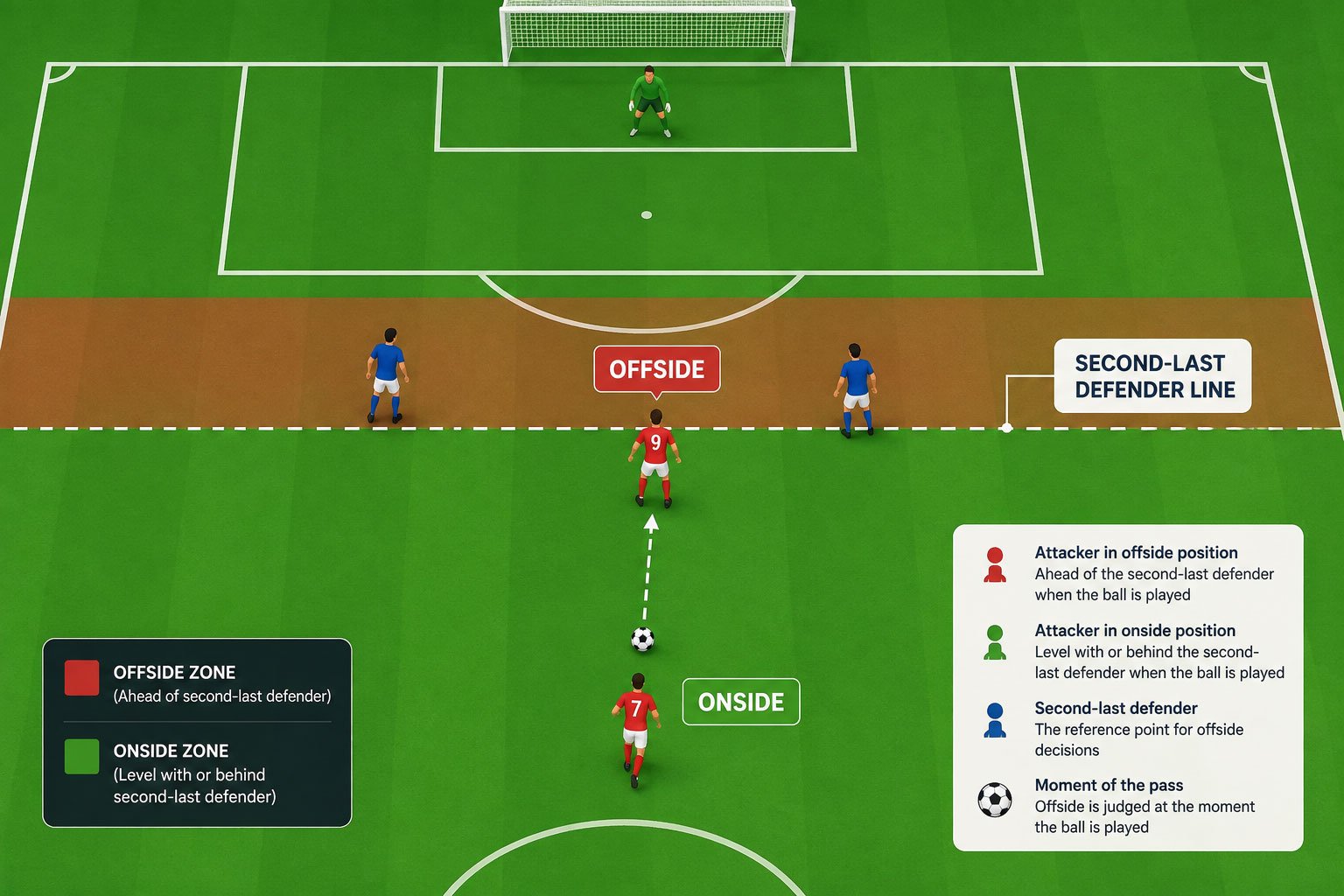
What Is the Offside Rule? A Simple Guide to Football’s Most Confusing Law
Quick answer: A player is in an offside position when, at the moment a teammate plays the ball, any part of their head, body, or feet is closer to the opponent’s goal line than both the ball and the second-last opponent. However, being in an offside position is not automatically an offence. The player must also become involved in active play.
That sounds complicated, but the basic idea is actually quite simple: look at where the attacker is when the ball is played, then check whether they become involved in the play.
For football fans in Malaysia and around the world, the offside rule can be one of the hardest parts of the game to understand. Let’s break it down step by step.
The Offside Rule in Simple Terms
The offside rule is designed to prevent attackers from gaining an unfair advantage by staying close to the opponent’s goal and waiting for a pass.
The important thing is that officials do not judge the attacker’s position when they receive the ball. They judge the position at the moment the teammate plays or touches the ball.
Imagine a striker running behind the defence. If the striker is in an onside position when the pass is made, they can continue their run and receive the ball legally, even if they are behind the defenders by the time the ball reaches them.
This is one of the most important points to understand about football offside.
How Does the Offside Rule Work in Football?
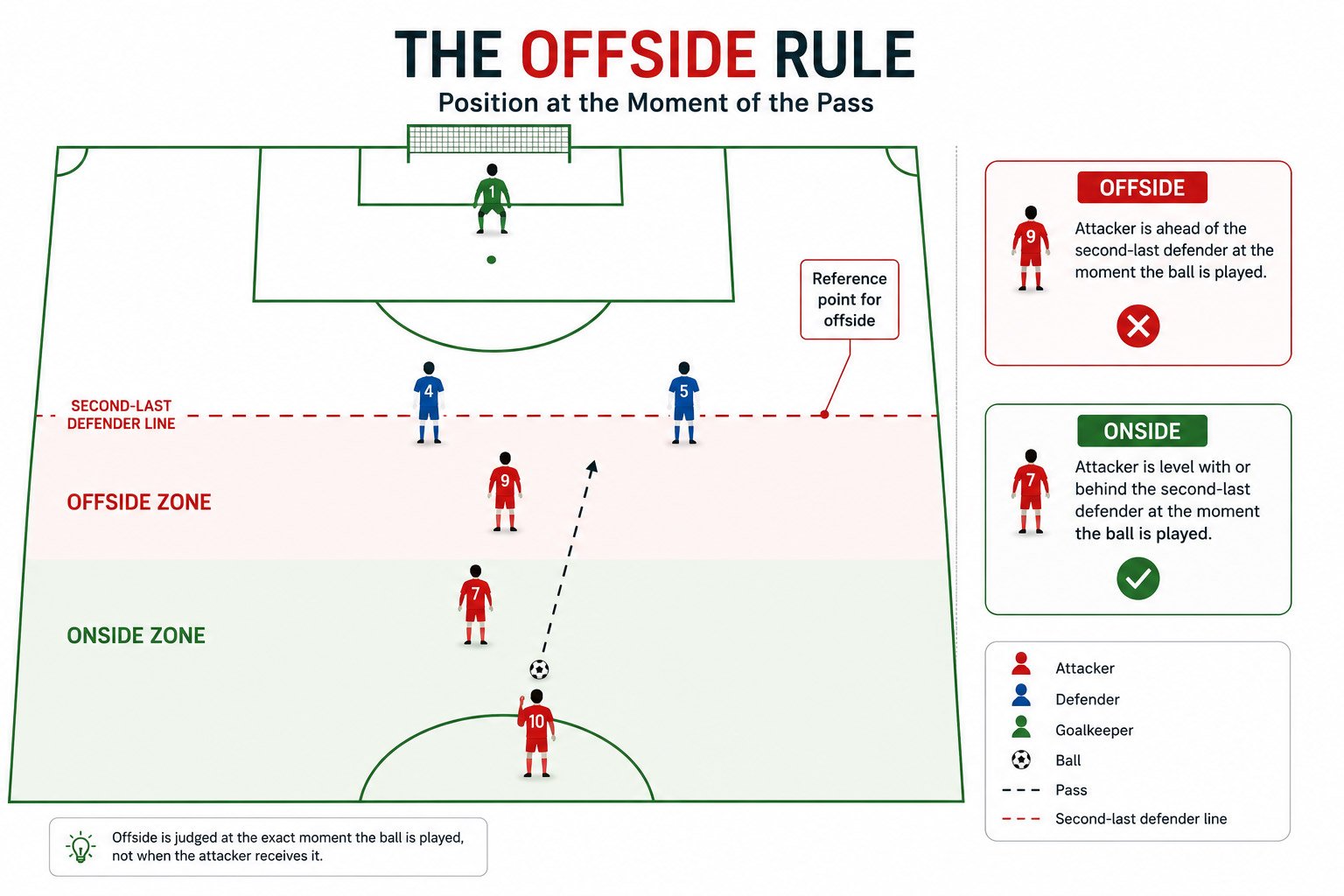
There are a few simple questions officials use when judging an offside situation.
1. Is the player in the opponent’s half?
A player cannot be penalised for being offside in their own half. They must be in the opponent’s half of the field, excluding the halfway line, when the relevant offside position is judged.
2. Is the player closer to the goal line than both the ball and the second-last opponent?
This is where many viewers get confused. The comparison is not simply between the attacker and the last defender. The attacker must be closer to the opponent’s goal line than both the ball and the second-last opponent.
Usually, the second-last opponent is the last outfield defender because the goalkeeper is often the deepest player. But that is not always the case.
3. Which parts of the body count?
The head, body and feet can be considered when determining an offside position. Hands and arms are not considered when determining an offside position, since players cannot legally score directly with them.
4. Did the player become involved in active play?
Being in an offside position is not enough by itself. An offence can occur when the player becomes involved in active play, such as by:
- playing or touching the ball;
- interfering with an opponent; or
- gaining an advantage from an offside position in situations covered by the Laws of the Game.
This explains why an assistant referee may sometimes wait before raising the flag.
Picture a striker standing shoulder-to-shoulder with the last defender while a teammate lines up a through ball. At this point, simply standing in that position does not automatically mean an offside offence has occurred. That moment — when the teammate plays or touches the ball — is the key reference point for judging the player’s position.
What Does “Level” Mean in Football Offside?
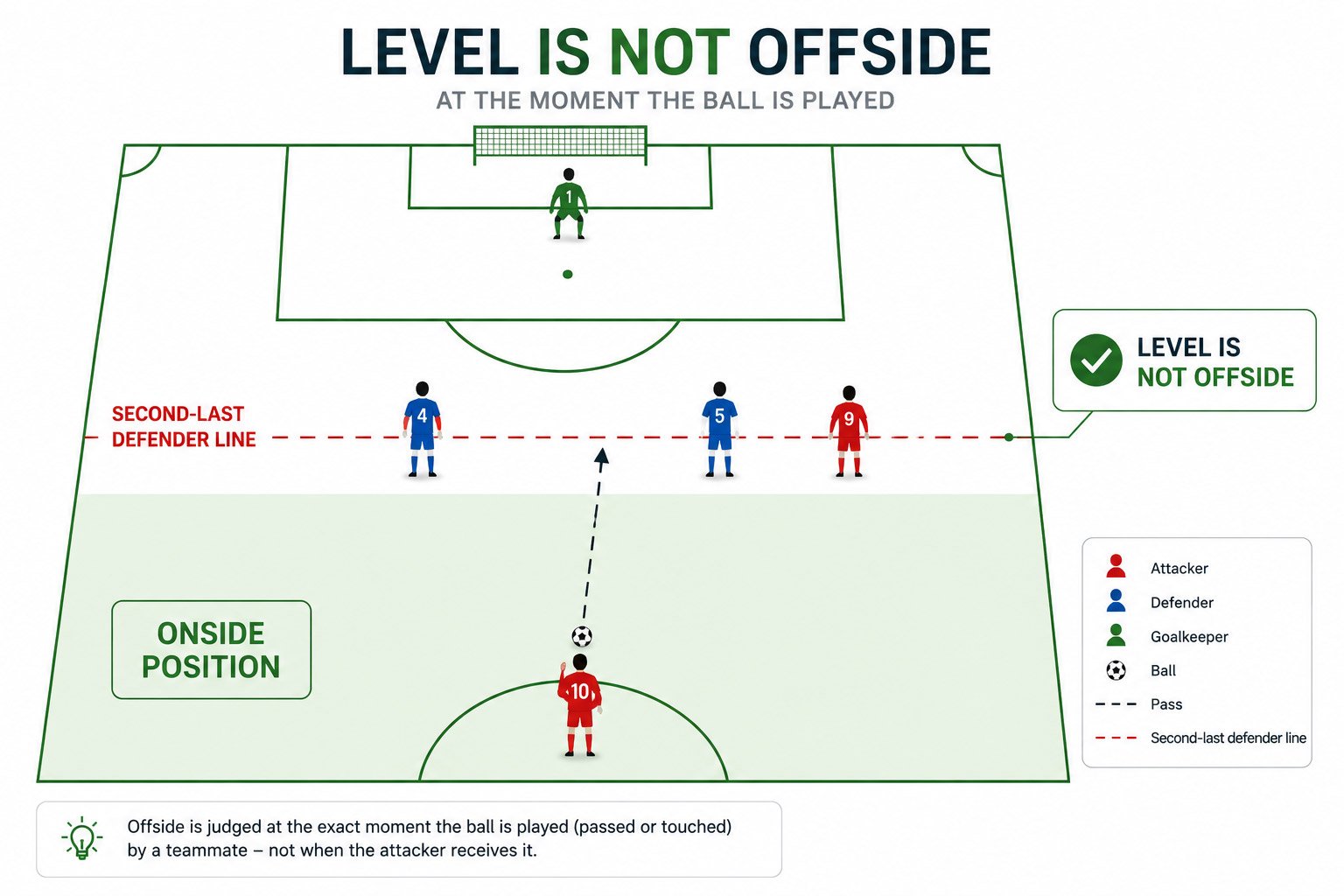
One of the most useful things to remember is that level is not offside.
If an attacker is level with the second-last opponent at the relevant moment, they are not in an offside position. The same principle applies when the attacker is level with the ball.
This can be difficult to judge during a fast-moving match, because a difference of only a few centimetres may separate an onside player from an offside one.
Why the Moment of the Pass Matters
A forward can end up several metres beyond the last defender by the time the ball actually reaches their feet — and still be perfectly onside, as long as they were level or behind at the instant their teammate played the pass. What happens after that moment doesn’t count against them.
Common Offside Mistakes
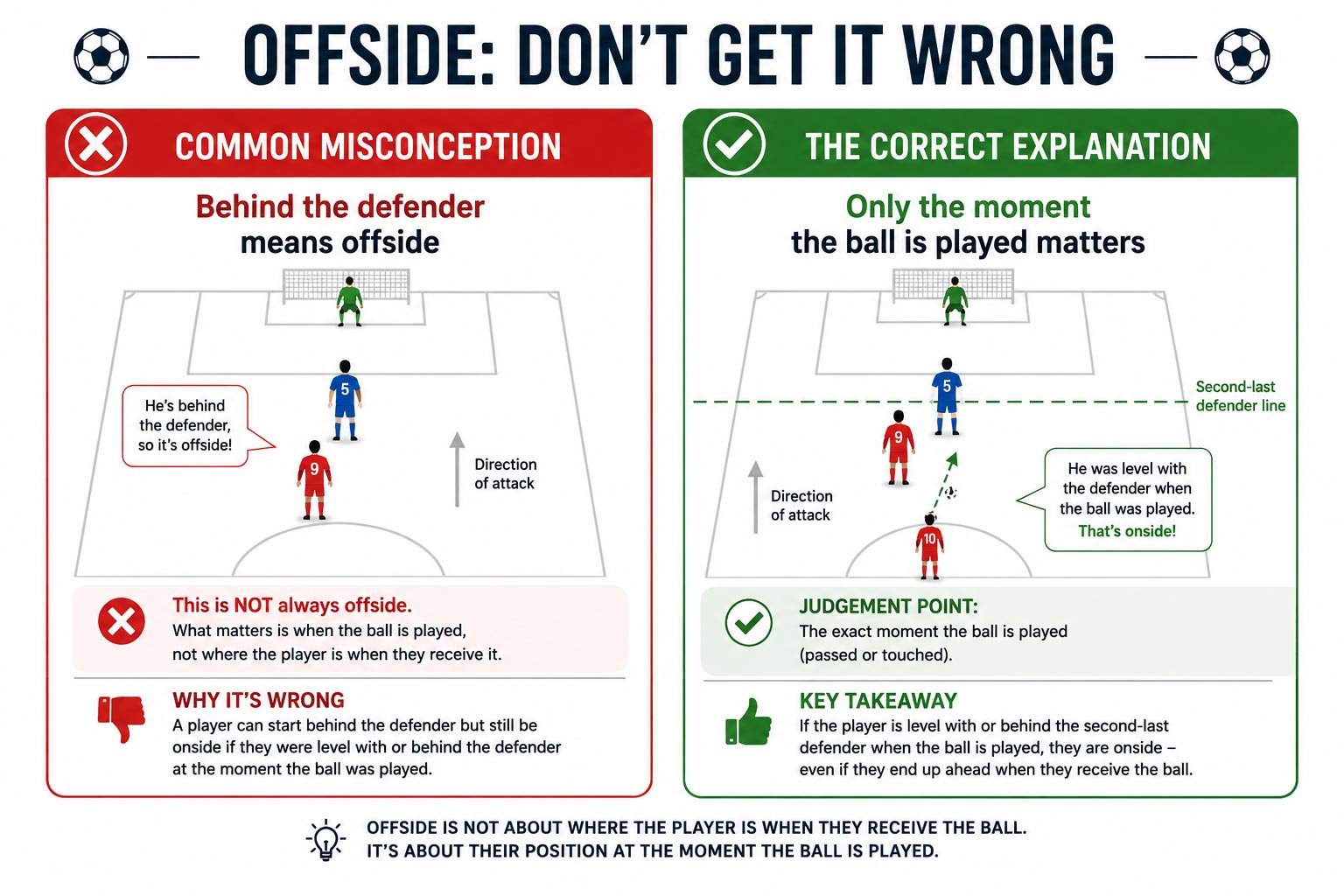
New football fans often make the same few mistakes when trying to understand the rule.
“The attacker is behind the defender, so it must be offside.”
Not necessarily — the relevant question is where the attacker was when the teammate played the ball.
“Being in an offside position is automatically a foul.”
No. A player can be in an offside position without committing an offence if they do not become involved in active play.
“The goalkeeper is always the last defender.”
Not necessarily. The rule refers to the second-last opponent, regardless of which position those players normally play.
“Any part of the attacker can make them offside.”
Hands and arms are excluded from the offside position calculation.
Why VAR Makes Offside Decisions So Interesting
VAR has changed how many close offside decisions are reviewed in modern football. In a very tight situation, video footage can be used to identify the moment the ball was played and assess the relative positions of the attacking player and defenders.
This can produce extremely precise decisions, but it has also generated plenty of debate among football fans. When a player appears to be only a few centimetres ahead, the decision can feel harsh even when it follows the technical definition of the law.
VAR can make a difficult call more precise, but that doesn’t always make the decision less controversial. When a goal is ruled out because of a tiny margin, the debate often continues long after the final whistle. If you want to understand exactly how that review process works, our guide to VAR technology breaks down the four situations VAR can actually check. These reviews are also one of the reasons matches often run longer than 90 minutes, since VAR checks are factored into the added time at the end of each half.
Why Offside Decisions Can Be Difficult to See Live
Football moves quickly, and spectators usually do not have the same viewing angle as the assistant referee.
A long pass can travel several metres in less than a second. During that time, attackers and defenders may all be moving at different speeds. That is why an attacker can appear clearly offside when the ball arrives even though they were actually onside when the pass was made.
The opposite can happen too: a player may appear level with a defender on television, but a different camera angle can reveal a small difference in position. Offside isn’t the only law in football that regularly confuses fans and sparks post-match debate — it’s simply one of the most visible ones, because it can wipe out a goal in an instant.
A Simple Way to Remember the Offside Rule
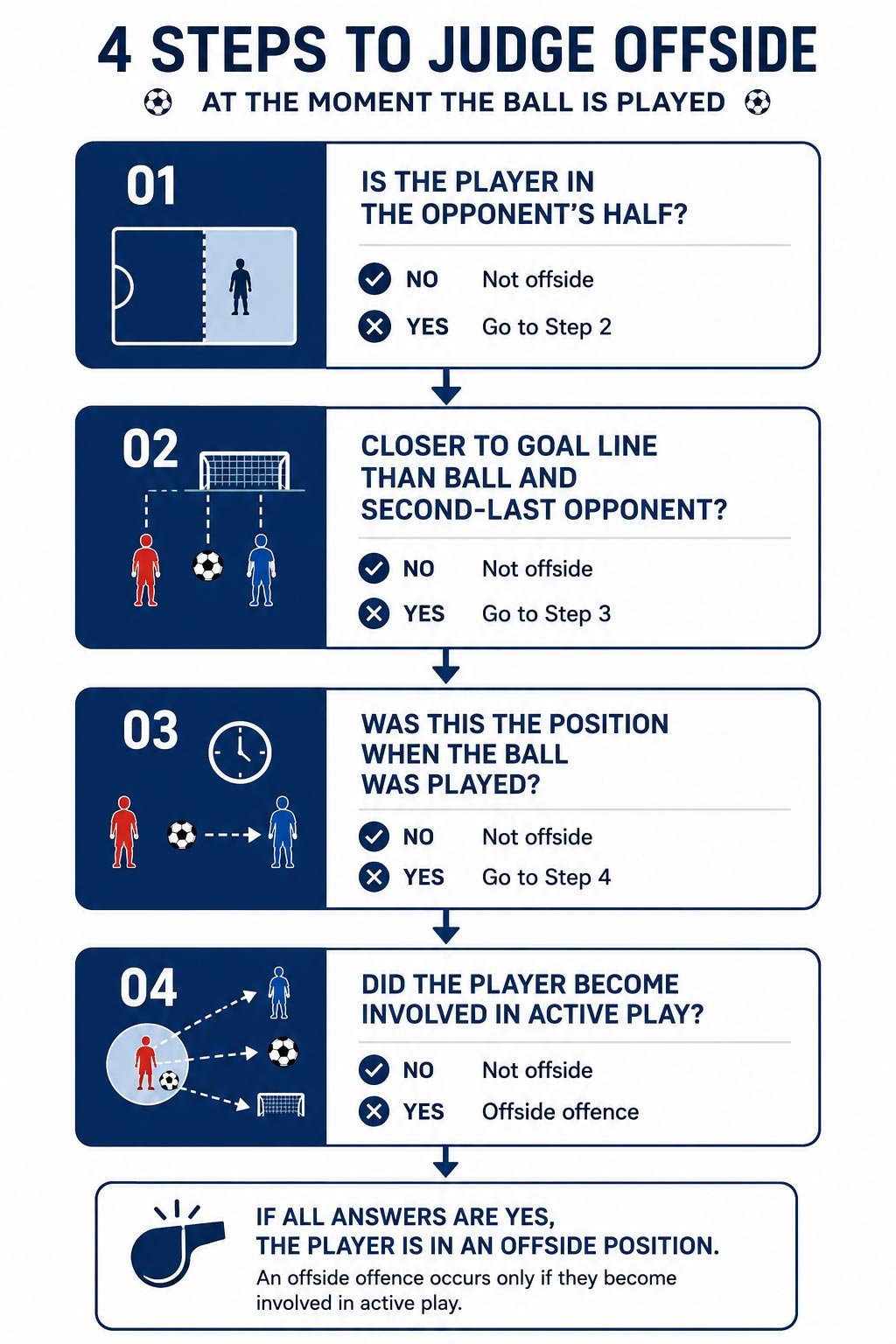
If you want a quick mental checklist, remember these four questions:
- Is the attacker in the opponent’s half?
- Are they closer to the goal line than both the ball and the second-last opponent?
- Were they in that position when the teammate played the ball?
- Did they become involved in active play?
If the relevant conditions are met, an offside offence may have occurred.
Frequently Asked Questions
Is being in an offside position always an offence?
No. Being in an offside position is not an offence by itself. The player must become involved in active play in a way covered by the Laws of the Game.
Can a player be offside in their own half?
No. A player can only be penalised for offside while in the opponent’s half of the pitch.
Is a player offside if they are level with the defender?
No. A player level with the second-last opponent, or level with the ball, is considered onside.
Why does VAR take so long to check some offside decisions?
Because very close calls require officials to pinpoint the exact moment the ball was played and compare precise body positions at that instant — a process that’s more accurate than the human eye, but not instant.
The Bottom Line
The offside rule sounds complicated because several conditions have to be checked at once, but the basic principle is straightforward: position matters at the moment the ball is played, and being in an offside position alone is not an offence.
Once you understand those two points, many of the confusing decisions you see during football matches become much easier to follow.
For the exact wording and latest version of the law, the best reference is IFAB’s official Laws of the Game.



















Leave A Comment