
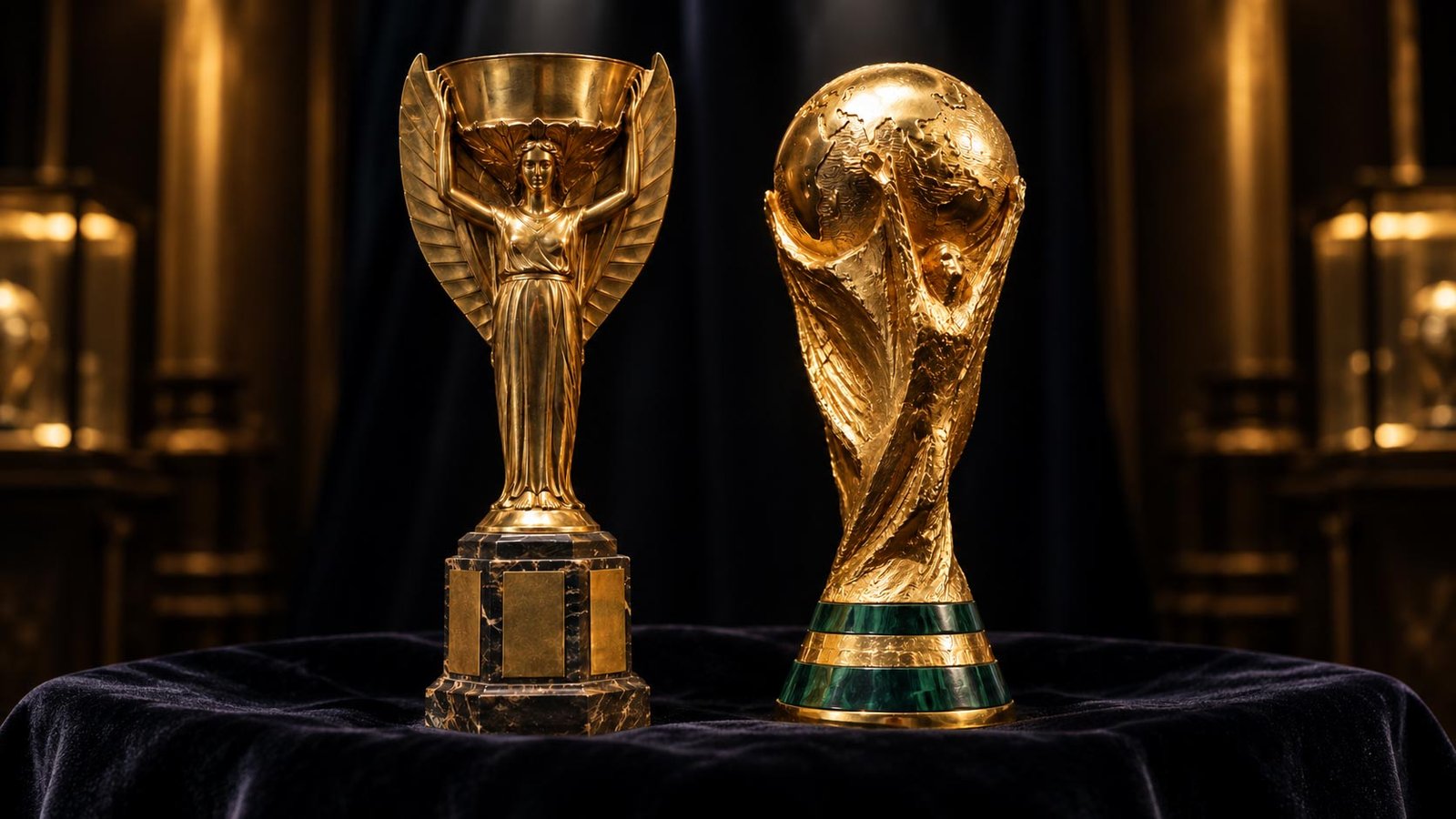
World Cup Trophy History: From the Jules Rimet Cup to Today’s Golden Icon
The short answer first: World Cup history has two main trophy designs — the Jules Rimet Cup, used from 1930 to 1970, and the FIFA World Cup Trophy introduced in 1974. Today’s champions lift the genuine FIFA World Cup Trophy on the pitch, then receive a separate gold-plated Winner’s Trophy afterwards to keep forever.
If you’ve ever watched a final at a mamak in KL with the volume up and someone’s uncle shouting at the screen, you’ve seen that moment without necessarily knowing what happens next. This article walks through why there are two main trophy designs, what happened to the first one, and how the one we watch today came to be.
The Jules Rimet Cup: The World Cup’s Original Trophy
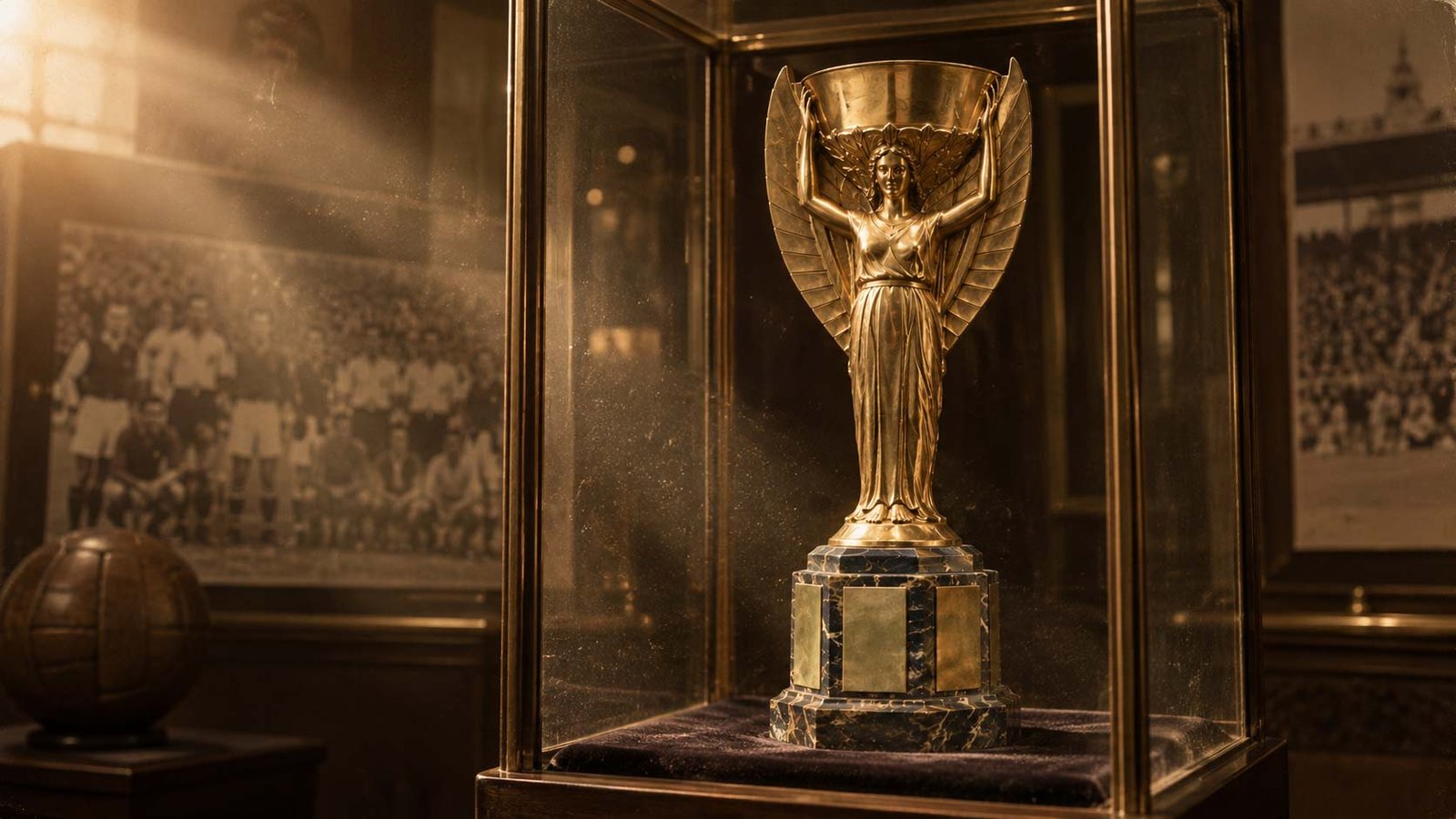
When FIFA launched the very first World Cup in 1930 under president Jules Rimet, the tournament needed a trophy, so French sculptor Abel Lafleur designed one depicting Nike, the Greek goddess of victory, holding a chalice above a pedestal. It was originally just called Victory. In 1946, once Rimet’s role in creating the tournament had cemented his legacy, the trophy was officially renamed in his honour — the Jules Rimet Cup.
For four decades, that cup travelled the world with each new champion. During the Second World War, FIFA vice-president Ottorino Barassi smuggled it out of a bank vault in Rome and hid it in a shoebox under his bed to keep it out of occupying forces’ hands. It was stolen from a public exhibition in England in 1966, only to turn up again days later, reportedly sniffed out by a dog named Pickles, wrapped in newspaper under a hedge in a South London garden.
Under the rules of the time, any nation that won the World Cup three times got to keep the Jules Rimet Cup permanently, and Brazil did exactly that in 1970, becoming the first three-time champion and taking the trophy home for good.
That should have been a happy ending. It wasn’t. In 1983, the Jules Rimet Cup was stolen again, this time from the Brazilian Football Confederation’s headquarters in Rio. This time, there was no lucky dog. It was never recovered, and it’s widely believed to have been melted down for its gold. So the original trophy — the one that started World Cup trophy history — simply doesn’t exist anymore.
Why FIFA Needed a New Trophy
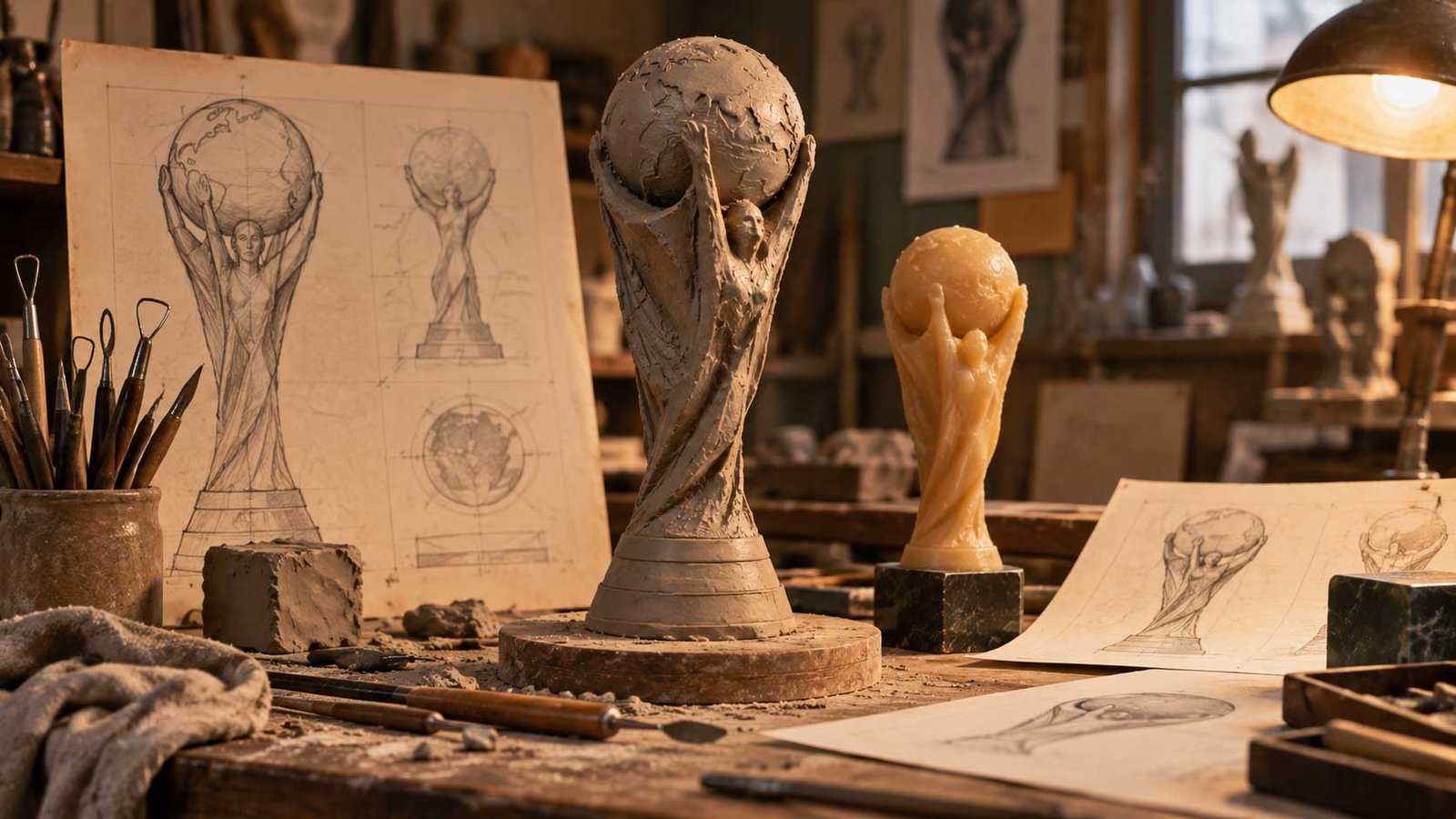
Brazil keeping the Jules Rimet Cup permanently in 1970 left FIFA without a trophy for future tournaments, so it commissioned a new one for the 1974 World Cup. Artists from seven countries submitted 53 designs. One entrant, Italian sculptor Silvio Gazzaniga, submitted a sketch alongside a prototype. FIFA chose his design, and the piece that’s now instantly recognisable around the world was born.
The History of the FIFA World Cup Trophy
The current trophy made its debut at the 1974 World Cup in West Germany, and the host nation became the first team to lift it. Gazzaniga described what he was trying to capture in the design: the struggle of the athlete, the joy of the fans, and the exact moment of victory, all spiralling upward into one shape. The two human figures rising from the base to hold up the globe are meant to represent exactly that — not a specific player, not a specific country, just the feeling of winning.
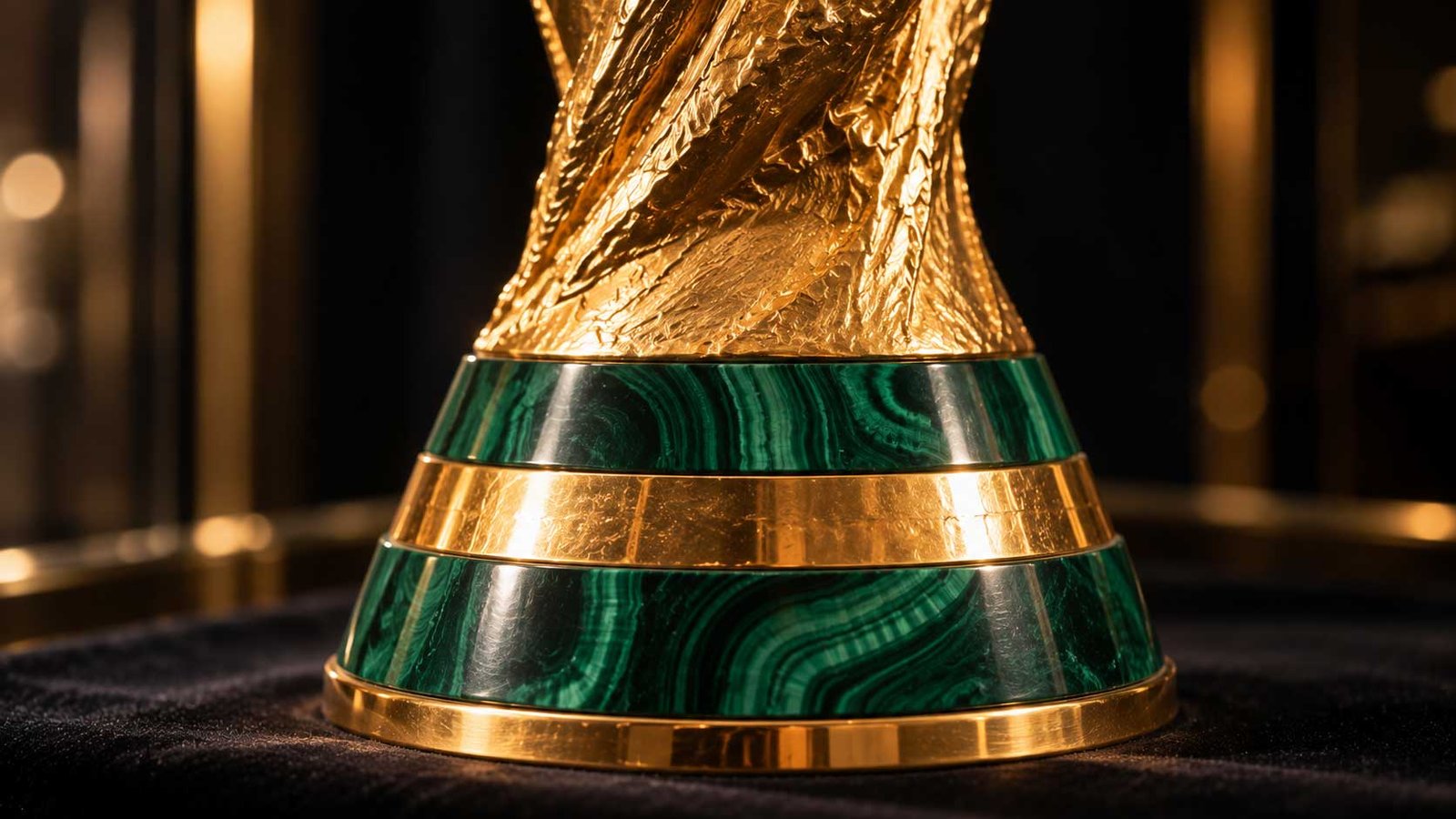
It’s crafted from solid 18-carat gold, stands 36.8 centimetres tall and weighs 6.175 kilograms. The base contains two layers of semi-precious green malachite.
Unlike the Jules Rimet Cup, no country gets to keep this exact trophy, no matter how many times they win — it remains in FIFA’s custody. Here’s the part most fans don’t realise: the champions do lift the FIFA World Cup Trophy in the moment of victory on the pitch.
It’s only afterwards, once the team heads back to the changing room, that FIFA carries out a trophy exchange — the original goes back into FIFA’s care, and the winning nation is handed the FIFA World Cup Winner’s Trophy, a gold-plated version they keep permanently. According to Gazzaniga’s family, FIFA plans to keep this exact design in use at least through 2038.
A Few Details Most Fans Miss
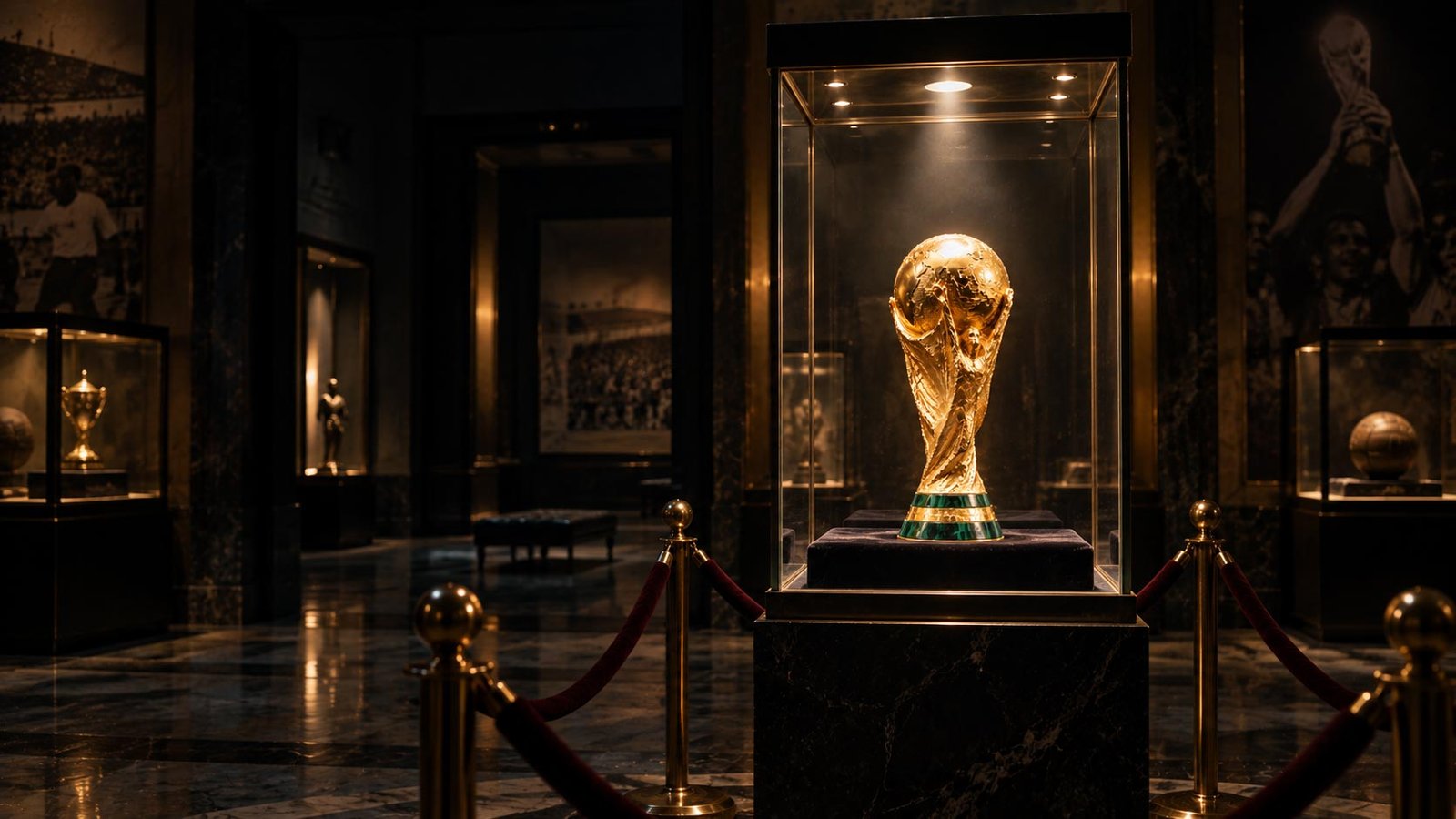
The malachite rings running around the base of the trophy weren’t a random design choice — Gazzaniga picked the green stone specifically because it echoes the colour of a football pitch.
There’s also very little left of the actual Jules Rimet Cup today: the original base was replaced around the 1954 World Cup, and the old base was later found in FIFA’s archives in Zurich in 2014, with FIFA making the discovery public in January 2015. It’s now the only known surviving piece of the original trophy.
Whichever version of World Cup trophy history you find more dramatic — the one that got stolen twice and vanished for good, or the one that’s been carefully guarded by FIFA since 1974 — both trophies tell the same underlying story: winning the World Cup has always been about more than the piece of metal itself, even when that piece of metal is worth its weight in gold, literally.
If trophies and records are your thing, it’s worth reading about the fastest goal ever scored in a World Cup match, or catching up on who’s tipped to lift the next one. And if the rules around how a final actually gets decided interest you, our breakdown of penalty shootout rules and the legends who may be playing their last World Cup are good follow-up reads.
For the full account straight from the source, FIFA’s own history of the trophy and Silvio Gazzaniga’s account of designing it are worth a look.


















Leave A Comment