
Why Does the World Cup Change Its Football Every Tournament?
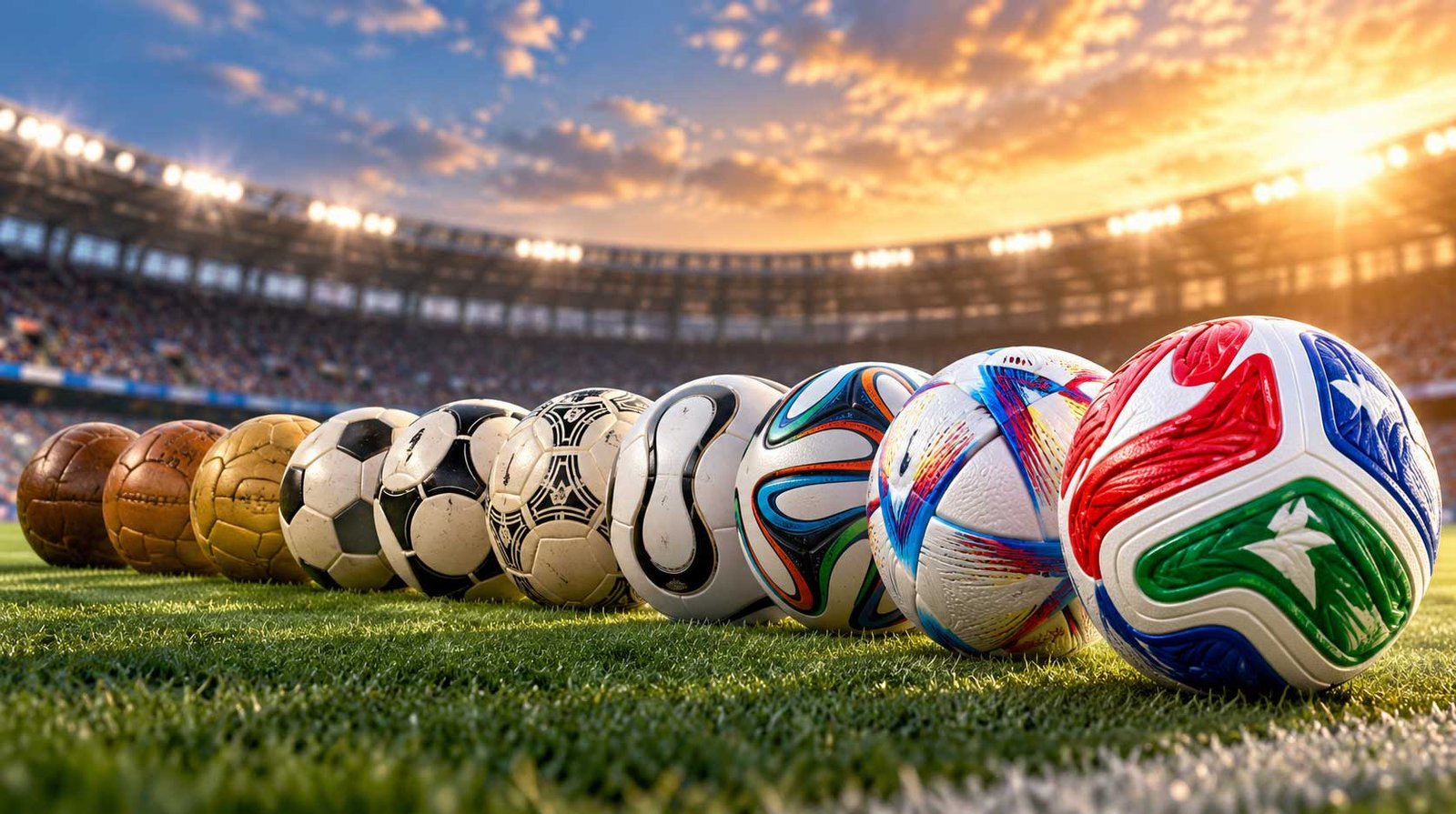
If you’ve ever watched the World Cup, you may have noticed something interesting: the World Cup Ball changes from one tournament to the next.
So, why does the World Cup change its ball?
The short answer is simple: football technology keeps developing. A new World Cup Ball gives manufacturers the opportunity to improve the way the ball moves, feels and performs, while also giving each tournament its own visual identity.
But it is not simply about creating a different-looking football every four years. Over time, World Cup football has moved from traditional leather balls to modern designs with fewer panels, improved surfaces and even built-in technology.
The story becomes even more interesting when you look at how the World Cup Ball has evolved from one generation to the next.
Why Does the World Cup Change Its Ball?
The main reason is the continued development of football technology.
A modern World Cup Ball can be designed to improve several aspects of the game, including:
- How consistently the ball travels through the air
- How much water it absorbs
- How players control it
- How much grip it provides
- How stable it feels when kicked
- How ball data can be used by match officials
These improvements do not mean every new ball completely changes the way football is played.
Instead, each new World Cup football is developed around the needs of modern players while also reflecting the identity of the tournament and its host countries.
That is why the match ball has become much more than just another piece of equipment.
How Has the World Cup Ball Changed Over Time?
The history of the World Cup Ball is closely connected to the history of football technology.
Early World Cup balls were very different from the balls used today. They were mainly made from leather, and their construction could vary considerably.
At the first World Cup in 1930, for example, the two teams in the final wanted to use different balls, so each half was played with a different ball. FIFA’s official overview of the history of World Cup match balls shows just how much football equipment has changed over the decades.
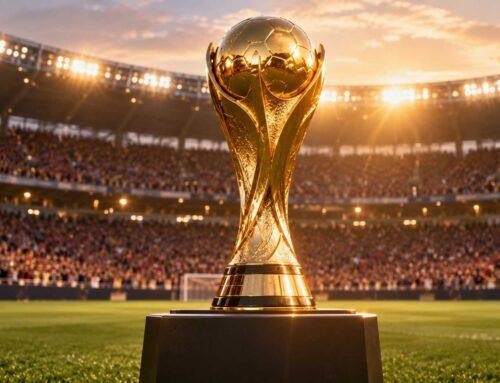
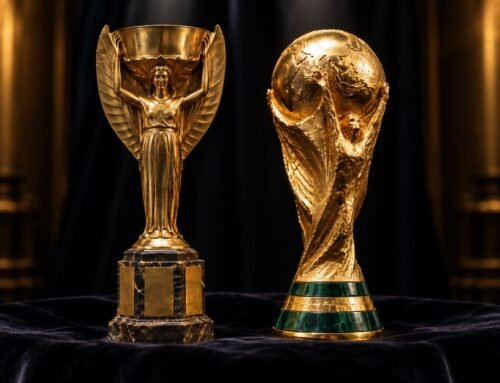
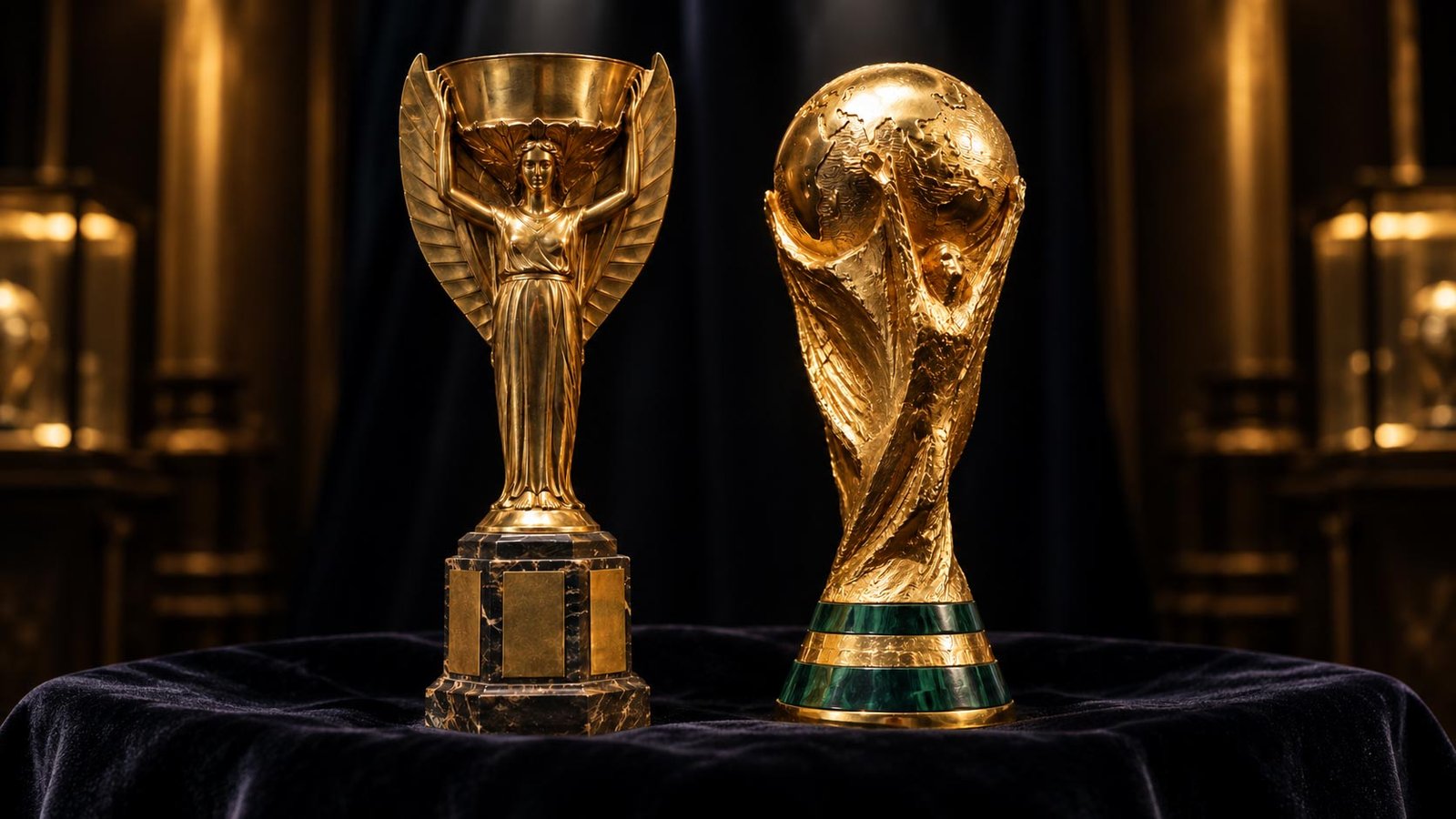
The development of the tournament itself also tells an interesting story. If you’re interested in another iconic part of the competition, you can explore our guide to the history of the World Cup Trophy.
1966: The Challenge 4-Star and More Careful Testing
Before the 1966 World Cup, more than 100 unbranded footballs were submitted to the Football Association in England.
The balls were tested for several factors, including:
- Size
- Roundness
- Weight
- Loss of pressure
- Rebound distance
The Challenge 4-Star, made by British company Slazenger, was eventually selected.
The ball had 25 panels and was available in white, yellow and orange. The orange version became particularly memorable because it was used during the 1966 World Cup final between England and West Germany.
This was an early example of an idea that remains important today: a World Cup Ball needs to be tested for performance, not just appearance.
1970: Telstar Changed the Look of World Cup Football
The 1970 World Cup in Mexico marked a major turning point.
adidas became the official World Cup ball supplier, and its first World Cup ball was the famous Telstar.
Telstar used 32 panels, including black pentagons and white hexagons. The design became one of the most recognisable football patterns in the world.
The black-and-white appearance was also practical for television at the time, helping viewers see the ball more clearly during live broadcasts.
This is one reason Telstar remains so closely associated with the classic image of World Cup football.
The ball’s history also marked the beginning of a long relationship between adidas and the tournament, which continues today. FIFA’s official history provides more detail on how the Telstar began the modern World Cup ball era.
1986: Azteca Introduced Synthetic Material
By the 1986 World Cup in Mexico, football technology had moved another step forward.
The Azteca became the first World Cup ball made entirely from synthetic material.
Why did that matter?
Synthetic material helped reduce water absorption and made the ball more durable. This was important because footballs could behave differently when exposed to rain or wet conditions.
The Azteca also used a design inspired by Mexican culture and Aztec architecture.
This showed another trend that would continue with later World Cup football designs: the match ball could be both sports equipment and a symbol of the tournament.
2006: Teamgeist Made the Ball More Rounded
The 2006 World Cup in Germany brought another major change.
The Teamgeist used 14 panels that were thermally bonded rather than traditionally stitched together.
In simple terms, the panels were joined using heat instead of conventional stitching.
This helped create a ball that was closer to a perfect sphere. FIFA’s historical record notes that the Teamgeist was less than one percent short of being a perfect sphere.
That may sound like a small difference, but the shape of a football can affect how consistently it travels through the air.
It was another step towards the highly controlled World Cup Ball designs used today.
2014: Brazuca Went Through Extensive Testing
The 2014 World Cup ball, Brazuca, took testing to another level.
According to FIFA, Brazuca was tested by:
- More than 600 professional footballers
- 30 teams of scientists
- Laboratory testing
The ball used six identical panels and was designed to provide improved stability, touch and grip. Testing also looked at how consistently the ball behaved in the air.
This shows why developing a new World Cup Ball involves much more than choosing a new colour or pattern.
Players need to control the ball accurately. Goalkeepers need to judge its movement. Passes, crosses and shots need to behave consistently.
A football may look simple, but getting the design right is far from simple.
What Makes a Modern World Cup Ball Different?
Modern World Cup football combines performance, design and technology.
One important factor is aerodynamics.
In simple terms, aerodynamics is about how an object moves through the air. The surface, panel shape and seams can all influence how a football behaves when it is kicked.
Another important factor is grip.
Players need to control the ball with their feet, while goalkeepers need to catch or punch it with confidence. This becomes particularly important in wet or humid conditions.
That is why modern ball designs pay close attention to surface texture and grip.
What Is the 2026 World Cup Ball?
The official 2026 World Cup Ball is called TRIONDA.
The name combines “Tri” and “Onda”, referring to three waves and the three countries hosting the tournament: Canada, Mexico and the United States.
TRIONDA uses a four-panel construction, making it very different from many earlier World Cup balls.
Its red, green and blue design represents the three host countries. The ball also includes symbols connected with each country, including a maple leaf for Canada, an eagle for Mexico and a star for the United States.
If you want to follow the tournament itself, our 2026 World Cup Schedule Guide covers the key matches and tournament schedule.
Why Is TRIONDA Different?
TRIONDA is not different only because of its appearance.
Its four-panel construction includes deeper seams designed to help create a more stable flight through the air.
The surface also features textured details designed to improve grip, particularly when players are dealing with wet or humid conditions.
The ball also includes a 500Hz motion sensor.
That sounds technical, but the basic idea is relatively simple.
The sensor collects detailed information about the ball’s movement and sends data to the VAR system in real time. This can help match officials make faster and more informed decisions, including decisions related to offside situations.
So, compared with older World Cup football, TRIONDA is not simply a new shape or colour. It also connects the ball with modern match technology.
You can learn more about the design and technology behind the official TRIONDA match ball through FIFA’s official explanation.
Why Did the 2026 World Cup Use a Different Final Ball?
There is another interesting detail about the 2026 tournament.
The standard TRIONDA was not the only World Cup Ball used during the competition.
For the semi-finals, bronze final and final, FIFA introduced TRIONDA FINAL.
It keeps the same four-panel construction and performance-focused design as TRIONDA, but it has a special appearance for the final stages of the tournament.
The design uses gold, white and black, with details inspired by the World Cup trophy and the 16 host cities of the 2026 tournament.
So, this was not a completely different type of football.
It was more like a special final-stage version of the same World Cup football.
That approach also makes sense from a design perspective. The final is the biggest match of the tournament, so a special ball gives the closing games their own visual identity.
FIFA also explains the design and purpose of the TRIONDA FINAL Official Match Ball.
Does a New World Cup Ball Change How the Game Is Played?
Sometimes a new ball can change how the game feels, but that does not mean it automatically changes football tactics.
Players may notice differences in:
- Touch
- Passing
- Shooting
- Ball speed
- Flight
- Grip
Goalkeepers may also pay close attention to how the ball moves through the air.
However, teams do not completely change their tactics simply because a new World Cup Ball has been introduced.
The bigger point is that players need to become comfortable with the ball.
That is why World Cup teams normally have opportunities to train with the official tournament football before the competition begins.
Once players understand how the ball responds to different types of passes, shots and crosses, they can adjust their technique accordingly.
From Telstar to TRIONDA: Why the Changes Matter
Looking back at World Cup balls makes one thing clear: football technology has changed dramatically.
The progression is easy to see:
Leather balls → improved synthetic materials → fewer panels → better surface control → more precise construction → connected technology
Telstar helped create the classic visual image of a football.
Azteca showed how synthetic materials could improve durability and reduce water absorption.
Teamgeist moved towards a more rounded construction.
Brazuca went through extensive player and laboratory testing.
And TRIONDA takes another step by combining ball design with connected technology.
The development did not happen overnight. Each generation built on changes introduced by earlier designs.
For more tournament background, you can also explore our guide to the 2026 World Cup groups and see how the teams were organised for the competition.
So, Why Does the World Cup Change Its Ball?
The answer is actually quite straightforward.
The World Cup changes its ball because football technology, player needs and tournament design continue to develop.
A new World Cup Ball can introduce:
- A new construction
- Better grip
- More stable flight
- Improved durability
- New testing methods
- Connected technology
- A design linked to the host countries
But there is another reason.
Every World Cup is different.
The ball becomes part of the tournament’s identity, just like the stadiums, trophy, host cities and opening ceremony.
From Telstar in 1970 to TRIONDA in 2026, World Cup football has become more advanced while remaining one of the most recognisable parts of the tournament.
And that is why the next World Cup will almost certainly bring another new ball — with a new design, new technology and another chapter in football history.












Leave A Comment