
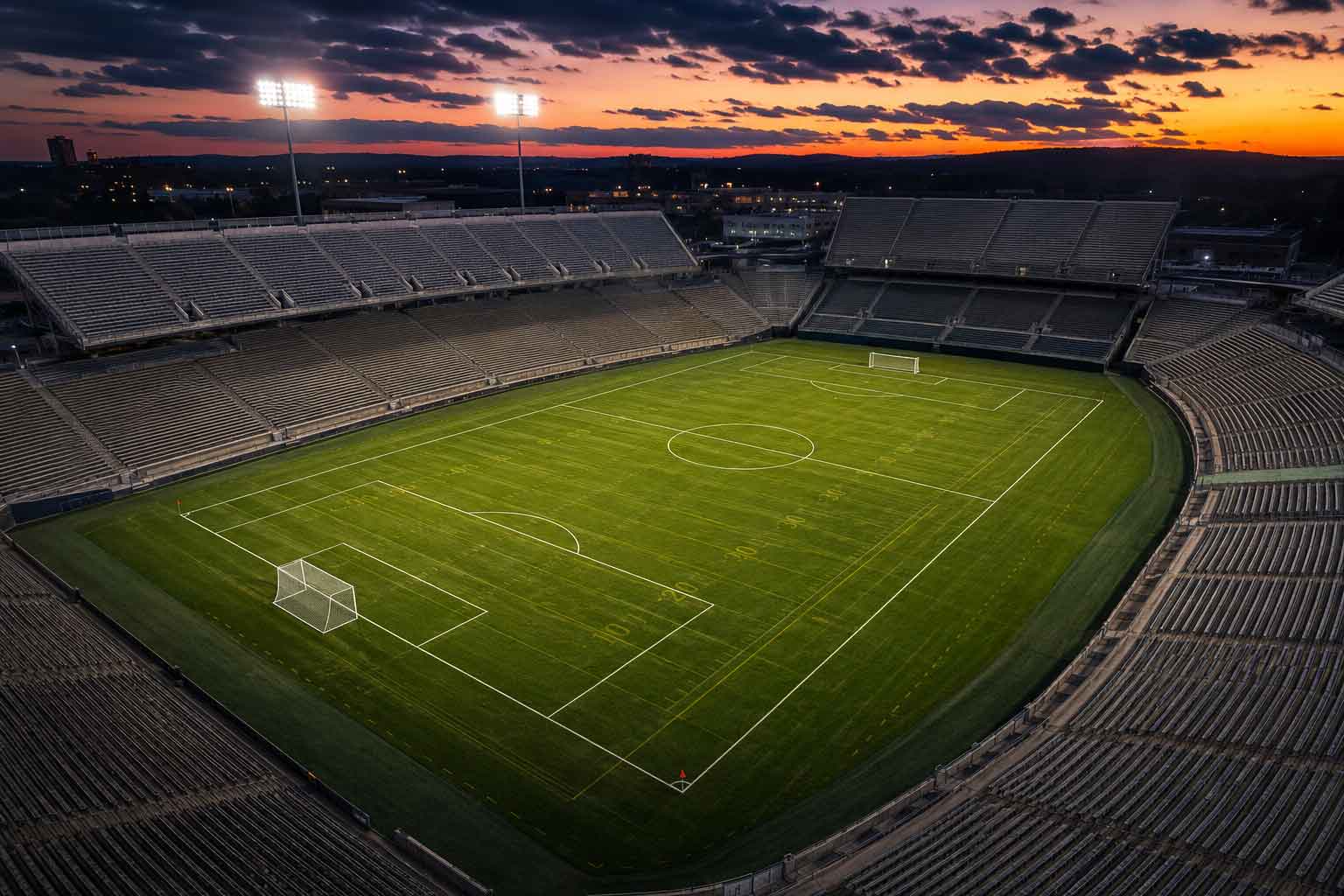
NFL Stadiums World Cup 2026: Inside America’s Wildest Football Crossover
Here’s the short version, because you shouldn’t have to read 1,000 words to find out how this story ends: it worked. Eleven NFL stadiums spent the first half of 2026 living double lives — home to linebackers and quarterbacks every fall, suddenly hosting Messi, Mbappé, and forty-six other national teams every summer — and by the time the group stage wrapped up in late June, nobody was seriously asking whether American football venues could pull off the World Cup. They were too busy talking about how good it looked doing it.
The culture clash everyone predicted between rigid NFL stadium operations and the sprawling, chaotic energy of World Cup 2026 didn’t really happen the way people expected. It wasn’t a clash so much as a strange, oddly charming merger. Atlanta’s retractable roof framed a soccer pitch instead of a gridiron. Seattle’s deafening crowd noise, usually reserved for Seahawks third downs, got redirected at penalty kicks. Dallas’s enormous bowl, built to dwarf opposing quarterbacks, just made the World Cup feel bigger.
That’s the headline. The part worth slowing down for is how eleven stadiums engineered for a completely different sport pulled this off — and what it tells us about where soccer culture in America is actually headed.
NFL Stadiums World Cup 2026: Why They Were Never Built for This
Start with the basics: an NFL field is 120 yards long and just over 53 yards wide. FIFA wants pitches roughly 115 by 75 yards, on real grass, full stop — no artificial turf allowed for World Cup matches. That’s not a small ask for stadiums designed around a completely different shape of game, several of which had spent years investing in artificial surfaces specifically because turf is cheaper to maintain and easier on an NFL schedule.
So before a single ticket got scanned, these venues had to solve a problem that had nothing to do with football at all: how do you grow a soccer pitch on a calendar built for American football, inside buildings that were never designed to let enough sunlight in?
From Turf to Turf: What It Actually Took
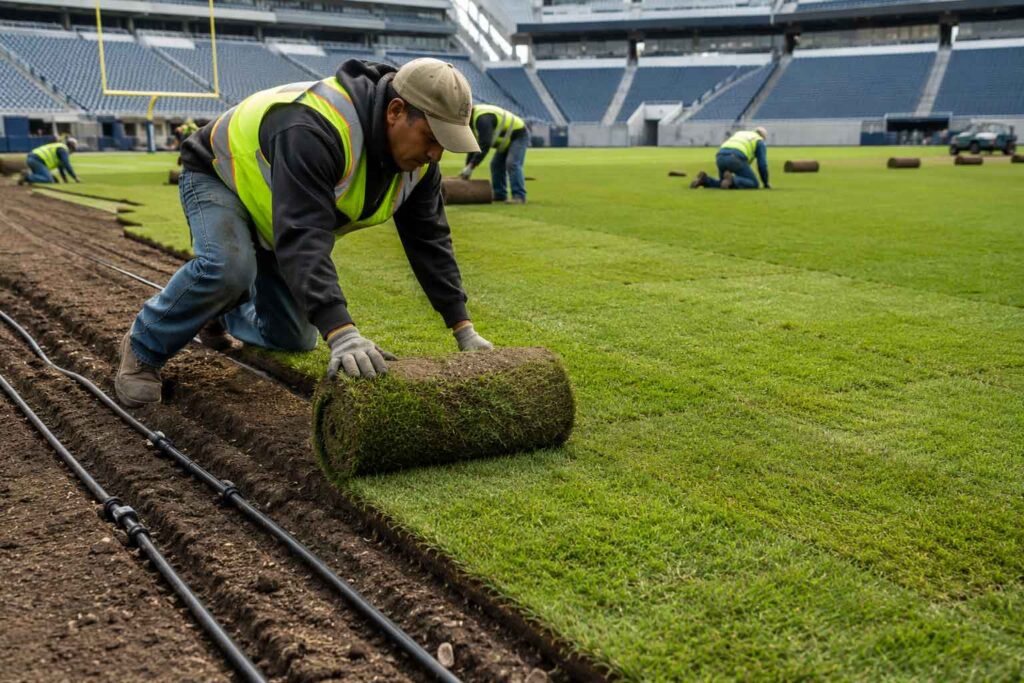
The answers varied by city, and some of them were almost absurd in scale, as ESPN documented in its rundown of the conversions. In Atlanta, crews at Mercedes-Benz Stadium tore out the artificial turf entirely starting in late January, replacing it with a ryegrass and Kentucky bluegrass blend grown specifically to survive indoors under that stadium’s famous retractable roof. Up in Boston, the team at Gillette Stadium dug ten inches down through old gravel layers, uncovering irrigation and heating systems that hadn’t been touched since the early 2000s, before rebuilding the whole field from the ground up.
Other venues had it slightly easier simply because they already ran on natural grass for MLS or college football — but every single one of the eleven NFL stadiums hosting World Cup 2026 matches had to resize, regrade, or fully replace its playing surface, cover up non-FIFA sponsor branding across thousands of square feet, and in some cases temporarily rename the building itself to strip away corporate sponsor names for tournament broadcasts.
It’s the kind of behind-the-scenes labor that never makes a highlight reel, but it’s the entire reason the NFL stadiums World Cup 2026 experiment didn’t blow up in anyone’s face. The pitch had to feel like a real soccer pitch, full stop, or none of the rest of it — the noise, the chants, the flags — would have landed the same way.
Soccer Culture America: Why This Tournament Hits Different
This is the part that actually matters beyond stadium logistics. Soccer culture America has been building quietly for two decades — Mexican and South American immigrant communities packing bars for Liga MX and Champions League matches long before NFL crowds noticed, MLS slowly filling stadiums in cities that once swore the sport would never take off, Messi’s move to Inter Miami turning casual interest into genuine obsession almost overnight.
World Cup 2026 didn’t create that culture. It walked into a country where the culture was already there, just scattered across different cities, different languages, different corners of the sports conversation — and put all of it inside NFL buildings built to hold tens of thousands of people at once. That’s the real culture clash worth paying attention to: not whether Americans would show up, but what happens when decades of quietly-built soccer culture in America finally get a stage as big as the one usually reserved for the Super Bowl.
What World Cup 2026 Means for the Next Super Bowl Sunday
The honest answer is nobody fully knows yet, and anyone claiming certainty is guessing. But the early signs point somewhere interesting: stadiums that spent millions converting to grass for a few weeks aren’t necessarily ripping it back out the day the trophy gets handed out. Cities that hosted matches got a real-time demonstration of what their venues look like dressed for international soccer rather than NFL Sundays — and several are already talking about future soccer fixtures, friendlies, and bids of their own.
World Cup 2026 may end up being less of a one-off spectacle and more of a proof of concept: that NFL stadiums, built for an entirely different game, can host the world’s biggest tournament without losing what makes them work the rest of the year. If nothing else, NFL stadiums World Cup 2026 proved that the conversion was worth the cost.
A Note for Fans Watching From Malaysia
If you’re following along from Malaysia, the time difference is the real opponent here — most of these matches land in the very early hours of the morning local time, which means a lot of bleary-eyed group chats and questionable 3 a.m. decisions to stay up “just for this half.” Worth it, probably. Check the full match schedule for your time zone and set the alarms accordingly.
The Bottom Line
The story of NFL stadiums hosting World Cup 2026 was never really about whether American football venues were big enough, loud enough, or impressive enough — they always were. It was about whether two very different sports cultures, built decades apart for completely different audiences, could share the same grass without either one losing what makes it itself. Soccer culture America didn’t need permission to grow, but it finally got the stage to match it. Turns out they could share it. The gridiron didn’t disappear. It just made room.
















Leave A Comment